
Even when we’re keeping a clean, gluten-free kitchen, carefully reading every label and making our own food, there is likely to be an occasion when we’re exposed to wheat or gluten. Not necessarily a full dose of it, but through cross contamination. It usually occurs when we go out and aren’t in complete control over what we’re eating or how it’s prepared. I’m personally so sensitive that if a slice of regular ol’ bread even touches my food, I can count on feeling unwell for upwards of three days!
Of course, there are different levels of sensitivity, but for many of us it doesn’t take much to experience a bad reaction. If yours is a true allergy (which physicians recognize as life-threatening), you will want to immediately get yourself or your loved one to a hospital where you can be properly treated. However, if you suffer from an intolerance/sensitivity, don’t panic! You’ll get through this encounter and you’ll be fine. I have actually found that there are steps that can taken to help you get through it much more quickly and even more comfortably.
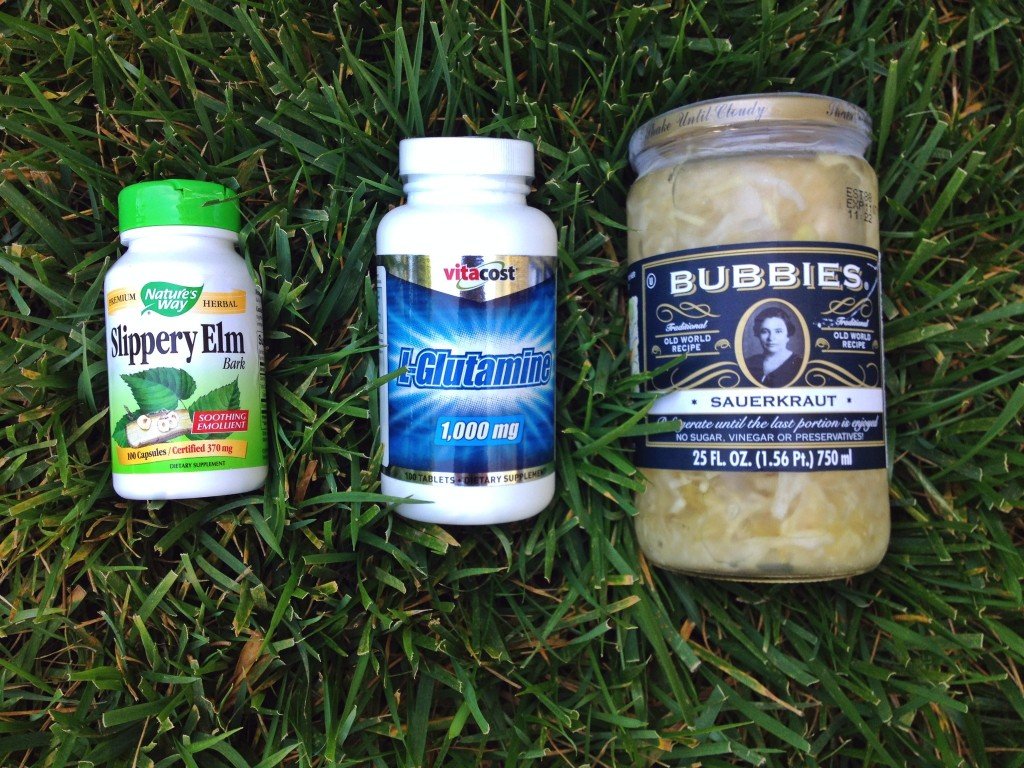
At the first familiar and all-too-unpleasant sign that we’ve been ‘glutened’ (which starts as a headache or dizziness for us), my son and I reach for a bottle of Slippery Elm capsules. I have kept them on hand for years. A couple of capsules taken with a large glass of water dilutes and flushes out the system, while the Slippery Elm helps to secrete mucus which coats and soothes the body within 15 – 20 minutes after ingesting them.
Slippery Elm is the moist, sticky inner bark of the elm. It has been used in North America for centuries. It can be made into a gruel (or thin cereal). I know about that. I’ve eaten it that way many time before I began using the capsules. It’s wonderful for a sore throat if sipped or eaten. Early American settlers used it as a survival foot and it is said to be mild enough for even a baby. George Washington and his troops survived on it for several days at Valley Forge. Native Americans have used slippery elm externally as well, in healing salves for wounds, boils, ulcers, burns, and skin inflammation. It was (and still is) taken orally to relieve coughs, sore throats, diarrhea, stomach problems, including GERD, Crohn’s disease, IBS, and colitis. Having said that you should always speak with a medical professional before using any herbal remedy.
While Slippery elm has no serious side effects, it does coat the digestive tract, which may slow down the absorption of other drugs or herbs. You should take slippery elm 2 hours before or after other herbs or medications you may be taking. (But again, please speak with your doctor first!)
My son and I also begin taking L-Glutamine, which is an amino acid that helps to repair, protect and heal the gut. Bodybuilders are known to take it, and it is said to be a helpful supplement for those undergoing chemotherapy. Dietary sources for glutamine include plant and animal proteins such as beef, pork and poultry, milk, yogurt, ricotta cheese, cottage cheese, raw spinach, raw parsley, and cabbage. It also comes in powder, capsule, tablet, or liquid form. Standard preparations are typically available in 250 – 2000 mg tablets or capsules. (Please check with your doctor first.)
Because some 70% of our immune system is located in the gut it is important for it to be healthy. So along with soothing and repairing the damage, we help to populate our gut with “good” bacteria by taking it in pill form or eating our probiotics. This is especially important if you’ve been on antibiotics, as they tend to wipe out both the good as well as the bad bacteria from your gut. Probiotics are readily found in Kefir, yogurt (with live cultures), miso soup, tempeh, and fermented foods, like sauerkraut and Kimchi (a spicy Korean cousin to saurkraut).
But please read the ingredients of these as some may contain wheat/gluten).
Safe gluten-free miso brands currently include: Eden Foods, Edward and Sons, and South River Miso
For safe gluten-free tempeh, look for: Turtle Island Foods, which currenly produce three different kinds of tempeh that are all GF: Organic Five Grain Tempeh, Spicy Veggie Tempeh, and Organic Soy Tempeh.
Lightlife also currrently has products that are gluten-free: Organic Soy Tempeh, Organic Flax Tempeh, Organic Wild Rice Tempeh and Garden Veggie Tempeh.

My “First Aid Kit”
There was also a wonderful article I wanted to share with you but sadly it’s no longer online. It was written by Dr. Amy Meyers. She took a three-step approach to helping those of us who suffer after we’ve been ‘glutened.’ Here is the link in case you are able to locate the original article on your own:
http://primaldocs.com/opinion/3-steps-to-recover-after-getting-glutened/
I hope this helps those of you who are and have suffered and aren’t sure what to do after being exposed or ‘glutened.’
If you have any other suggestions, questions, or ideas, I’d love to hear them so I may pass them along!
Thank you! =)
Additional resources:
National Celiac Association (https://nationalceliac.org/celiac-disease-questions/what-to-eat-after-being-glutened/)
WebMD Slippery Elm Benefits (https://www.webmd.com/vitamins-and-supplements/slippery-elm-uses-and-risks)
Celiac.com (https://www.celiac.com/celiac-disease/ten-things-to-try-if-you-accidentally-eat-gluten-r3416/_